A real patient journey from hairline concerns to a natural-looking result — documented from the day of surgery to one year later.
For some people, hair loss is simply a change in appearance. For others, it can affect how they feel when they look in the mirror, attend a meeting, or step in front of a camera.
For one Dubai-based healthcare marketing professional, hair restoration was about more than bringing back his hairline. It was about feeling comfortable with his appearance again, particularly in a career where being visible, communicating confidently, and facing the camera are part of everyday life.
His journey with Hair Clinic Dubai tells a story of careful planning, a documented treatment process, healing, patience, and a one-year result that he can share in his own words.
Here is his journey, from the concerns that brought him to the clinic to the results he achieved over the following 12 months.
1. When Your Career Keeps You in Front of the Camera
Working in healthcare marketing in Dubai means being part of a fast-moving, people-focused industry. Professional presentations, video content, meetings, and regular camera appearances can all be part of the job.
When your appearance is regularly captured on camera, even a gradual change in your hairline can become something you notice more often.
For this patient, the goal was to restore a natural-looking hairline that suited his facial features and helped him feel more comfortable in front of the camera.
He wasn’t simply looking for a change in his hairstyle. He wanted a solution that would look natural, complement his appearance, and fit his professional life.
Hair restoration is a personal decision. The right approach begins with understanding what matters to the individual patient, assessing the available donor hair, and planning a hairline that is appropriate for their circumstances.
That was the starting point of his journey with Hair Clinic Dubai.
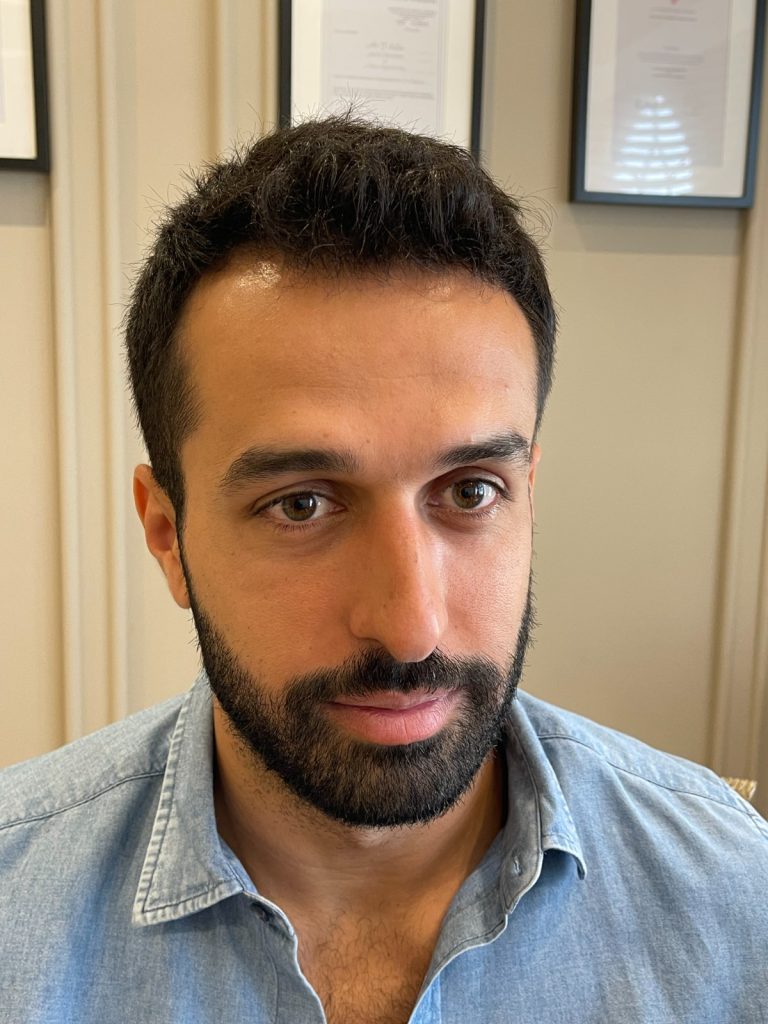
Before the procedure: the patient’s original hairline and frontal appearance ahead of his hair restoration journey
2. Every Successful Journey Begins With a Plan
A natural-looking hair transplant is not simply about placing hair into areas where it has become thinner. It requires careful assessment, thoughtful design, and an understanding of how the hairline should complement the patient’s face.
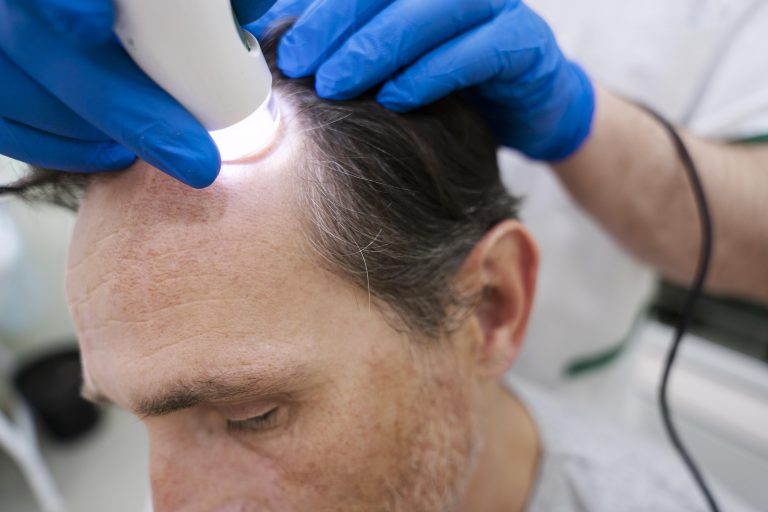
Before surgery, the doctor assessed the patient’s existing hairline and donor area — the region at the back of the scalp from which hair follicles could be harvested.
The objective was to plan a hairline that looked balanced and natural while taking the donor supply into consideration.
This stage is particularly important because a hair transplant involves using a finite resource: the patient’s own donor hair. Responsible planning considers both the desired appearance and the long-term management of available follicles.
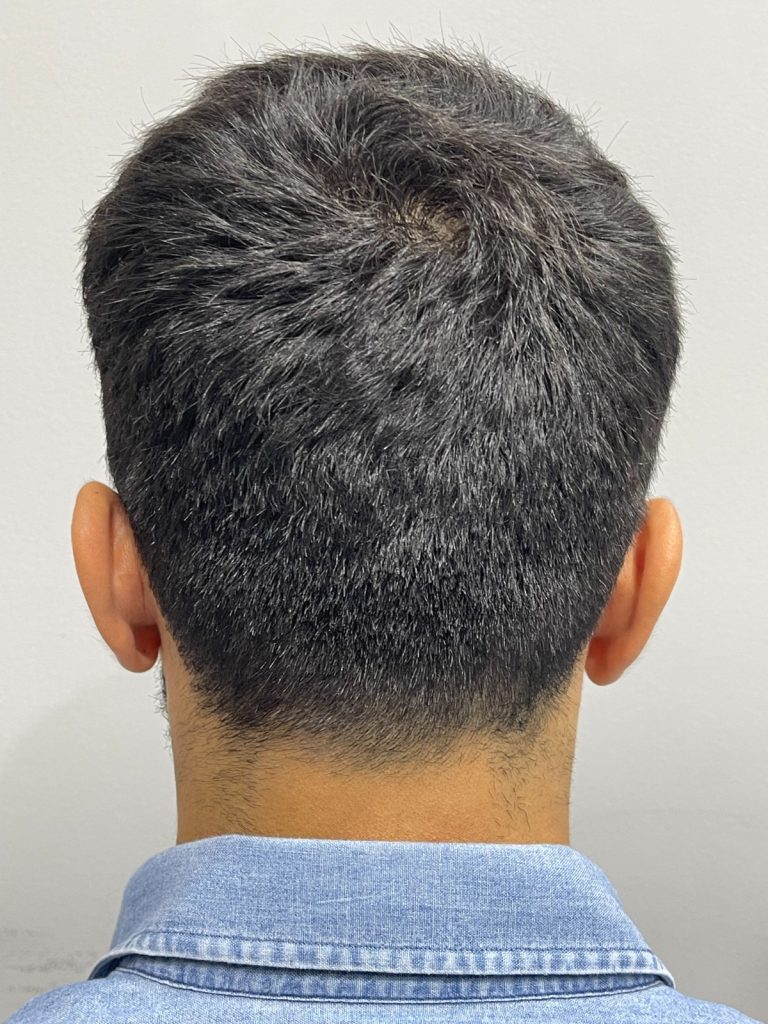
Preoperative donor-area assessment, an important part of planning the procedure.
Designing the Hairline
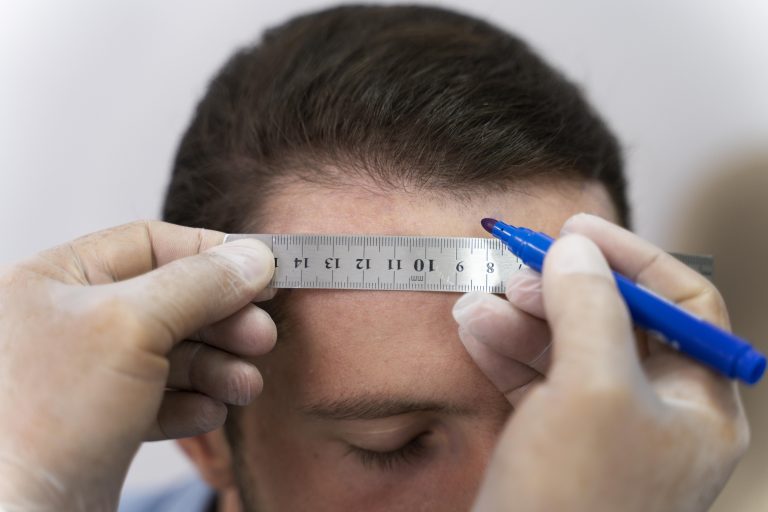
On the day of surgery, the doctor marked the planned hairline and recipient area before beginning the procedure.
Hairline design requires attention to facial proportions, the patient’s existing hair characteristics, and the intended result. A hairline that appears too low, too straight, or inconsistent with the patient’s natural features may look less convincing.
The aim is not to create an artificial-looking line. It is to plan a hairline that looks appropriate for the individual.
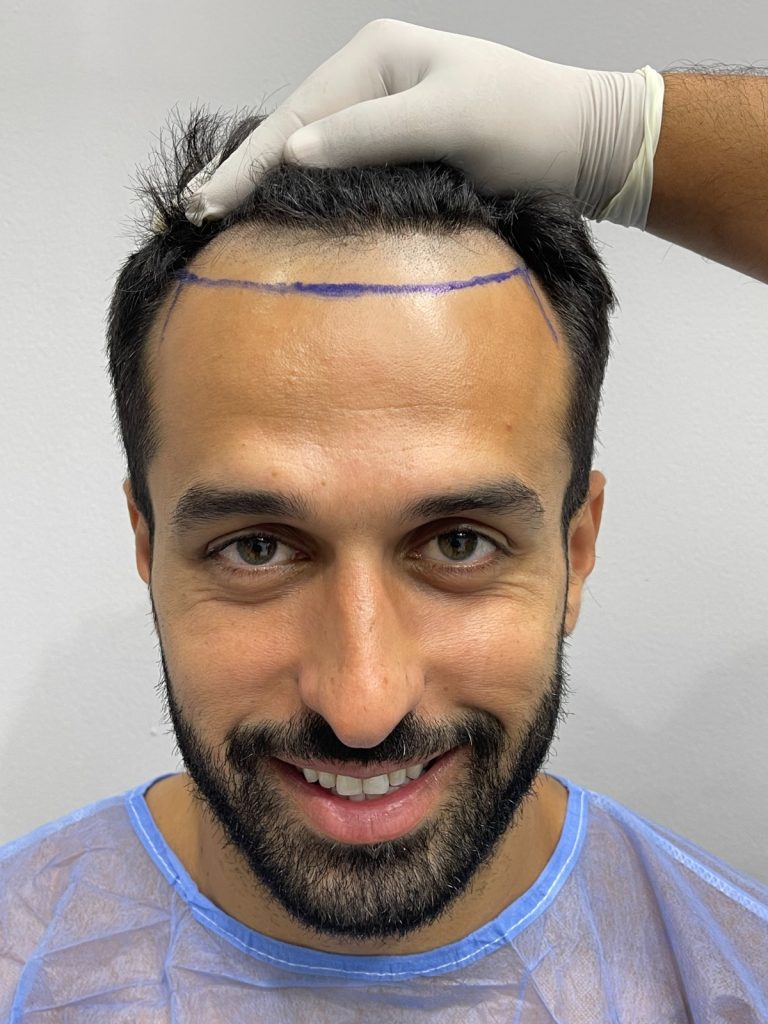
The planned hairline marked by the doctor before the hair transplant procedure
Protecting the Donor Area
The donor area deserves just as much attention as the front hairline.
The density and characteristics of the available donor hair help inform the treatment plan, including how many follicles may be suitable for harvesting. The doctor must also consider how the donor area may look after healing.
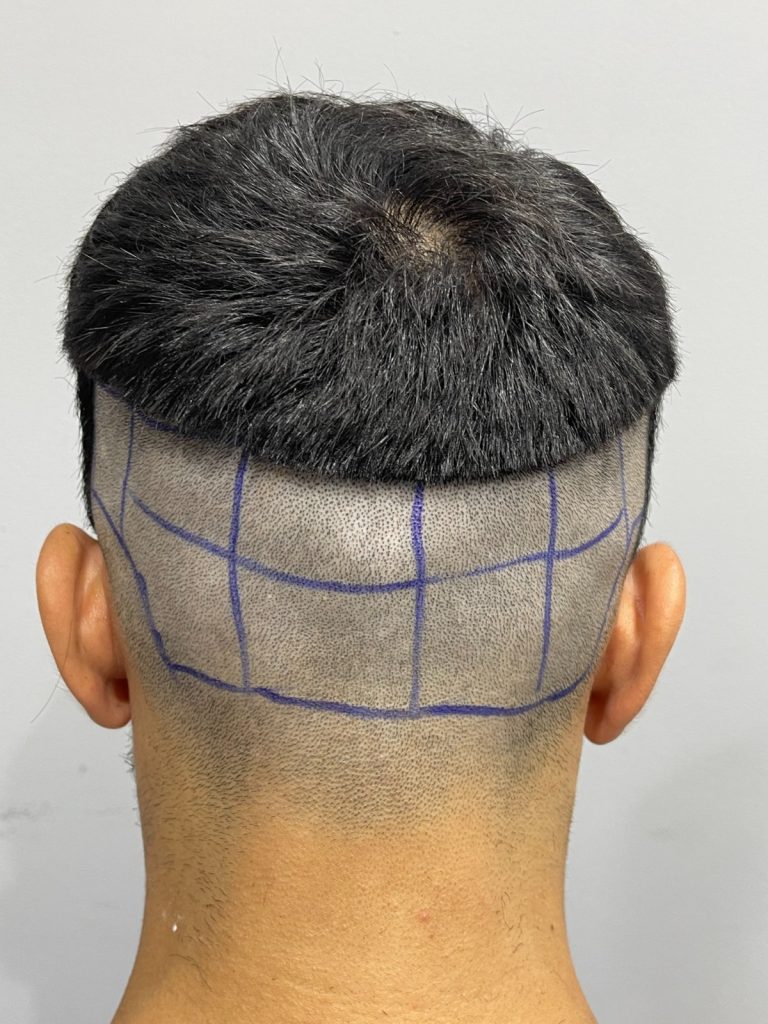
These photographs document an important part of the process: a hair transplant is a planned medical procedure, not an overnight cosmetic change.
3. Four Days After Surgery: The Early Recovery Stage
The first few days after a hair transplant are part of the healing process.
Patients may notice redness, small scabs, swelling, or visible signs of the procedure in the recipient area. The appearance of the donor area also changes as it begins to recover.
For anyone considering a transplant, seeing this stage can help set realistic expectations. A newly transplanted hairline will not look like a fully grown head of hair immediately after surgery.
Following the clinic’s postoperative instructions and attending recommended follow-up appointments are important parts of recovery.
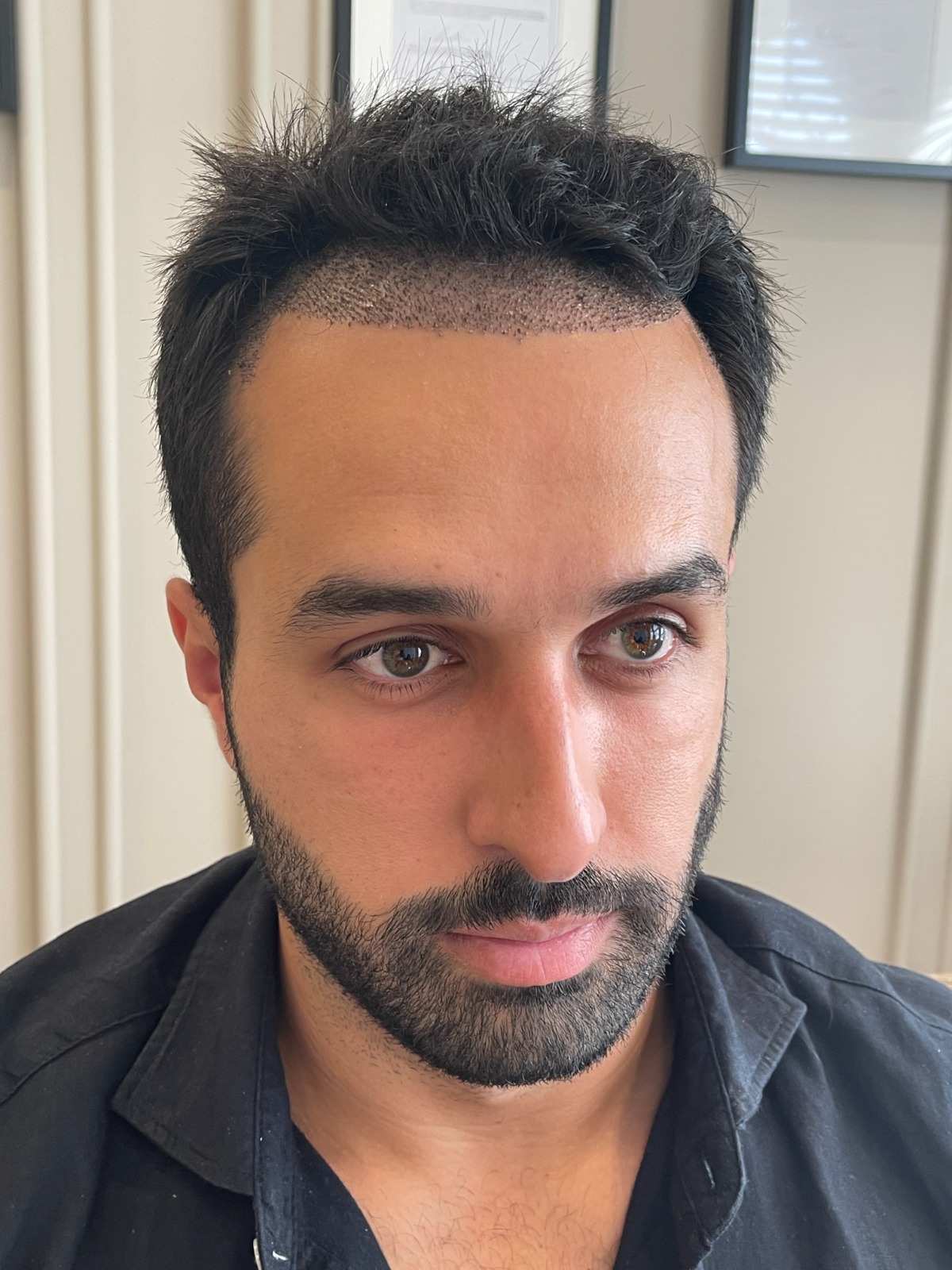
Day four after the procedure: the recipient area during early postoperative healing.
How the Donor Area Looked Four Days Later
The back of the scalp provides another perspective on the recovery process.
After follicular harvesting, the donor area needs time to heal. Its appearance during the early days should be understood as part of the recovery timeline, rather than as a final indication of how it will look later.
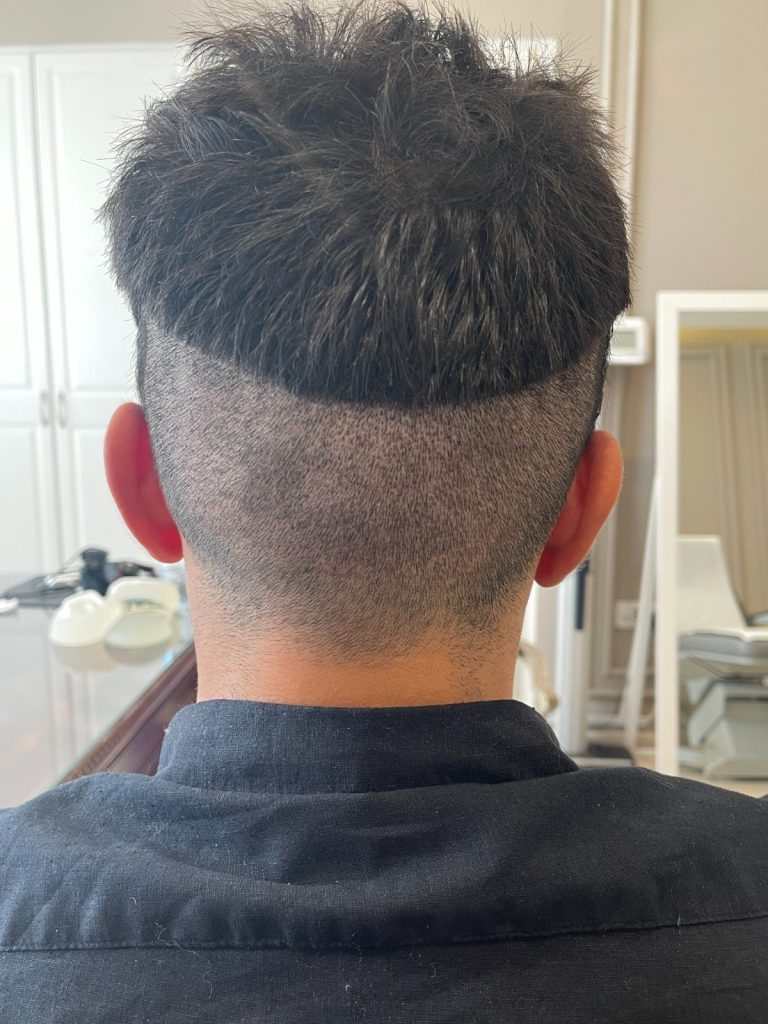
The donor area four days after follicular harvesting, documenting the early healing stage.
At this point, patience matters. The immediate postoperative appearance is only one chapter of the journey.
4. Four Weeks Later: Visible Signs of Healing
By the four-week mark, the scalp may look noticeably different from how it appeared during the first few days.
In this patient’s photographic record, the one-month checkpoint offers an opportunity to observe the healing of both the recipient and donor areas.
It is important to understand that visible healing does not mean the final hair transplant result has arrived. Transplanted hairs commonly shed during the early weeks, and new growth generally takes several months to become noticeable.
The timeline varies between individuals, so each patient’s progress should be assessed on its own merits.
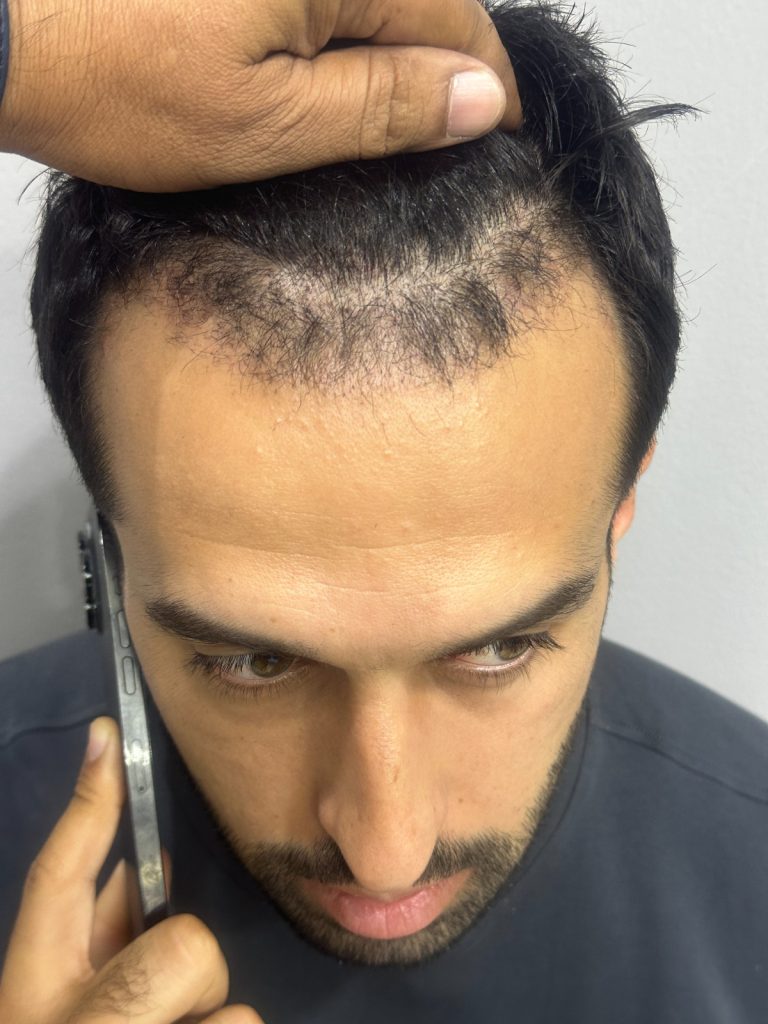
Four-week follow-up: the frontal area during the healing phase.
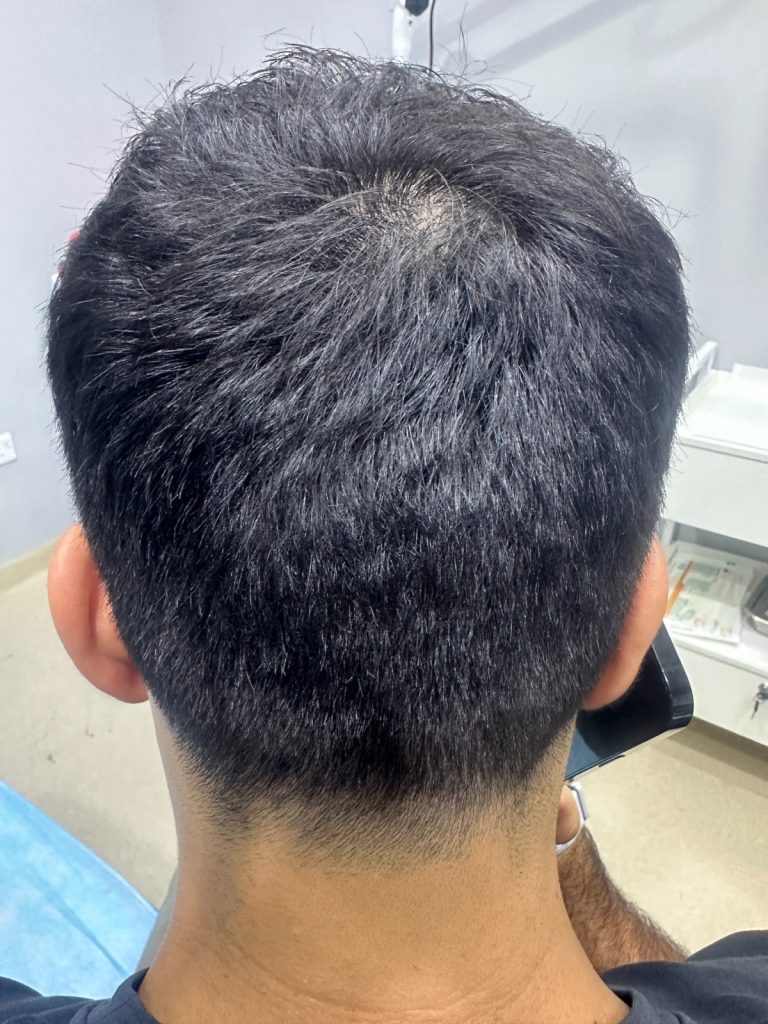
Donor-area follow-up at four weeks, documenting the scalp’s recovery.
For prospective patients, this stage is a reminder that a hair transplant requires patience. The early recovery period and the eventual cosmetic result are two different milestones.
5. One Year Later: The Result That Completes the Story
A year after the procedure, the patient returned to document his hair restoration result.
The one-year follow-up provides a more meaningful view of the outcome than photographs taken immediately after surgery. By this stage, transplanted hair has had substantial time to grow, although individual results and maturation timelines can vary.
The most useful way to appreciate this patient’s journey is to compare the original photographs with the final images, looking at the hairline, overall frontal appearance, and donor area.
The Front View: Assessing the Hairline
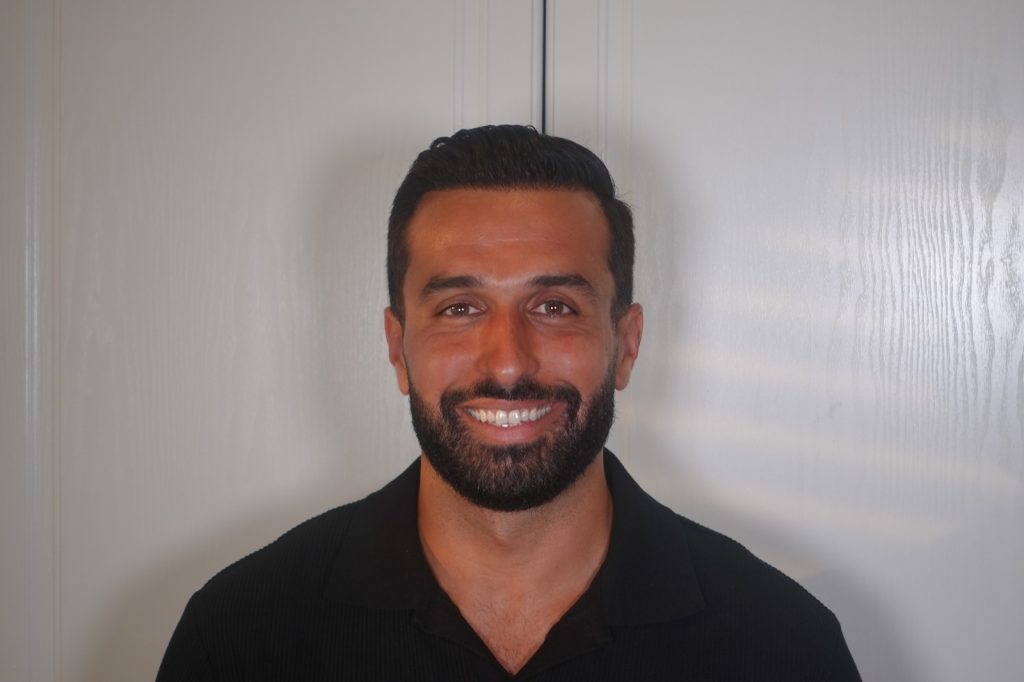
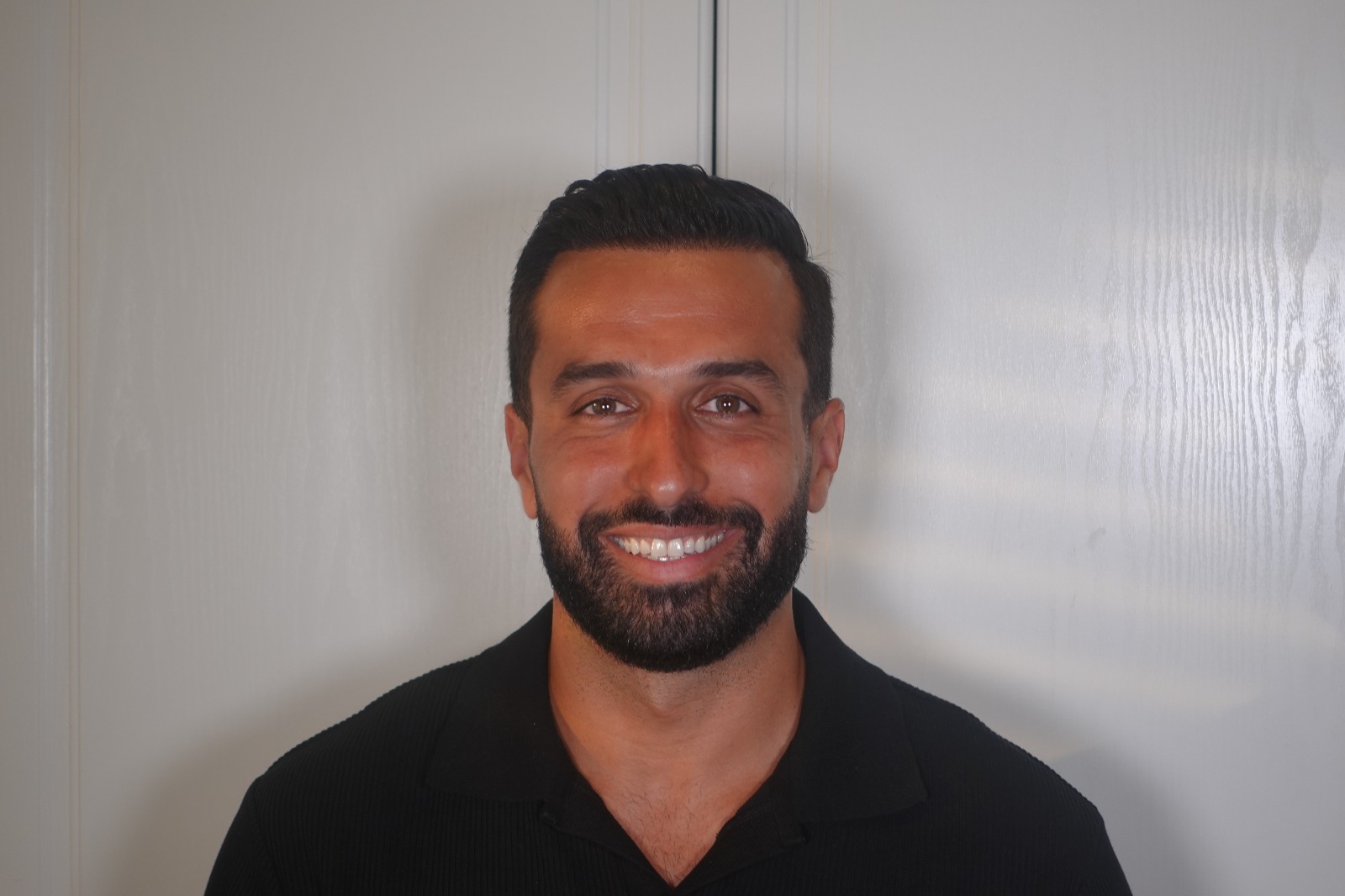
One-year follow-up: the patient’s frontal hairline after hair transplantation.
The front view is especially relevant for someone who regularly appears on camera. It allows readers to assess the hairline in relation to the patient’s facial features and overall appearance.
The Left Side: Seeing the Hairline From Another Angle
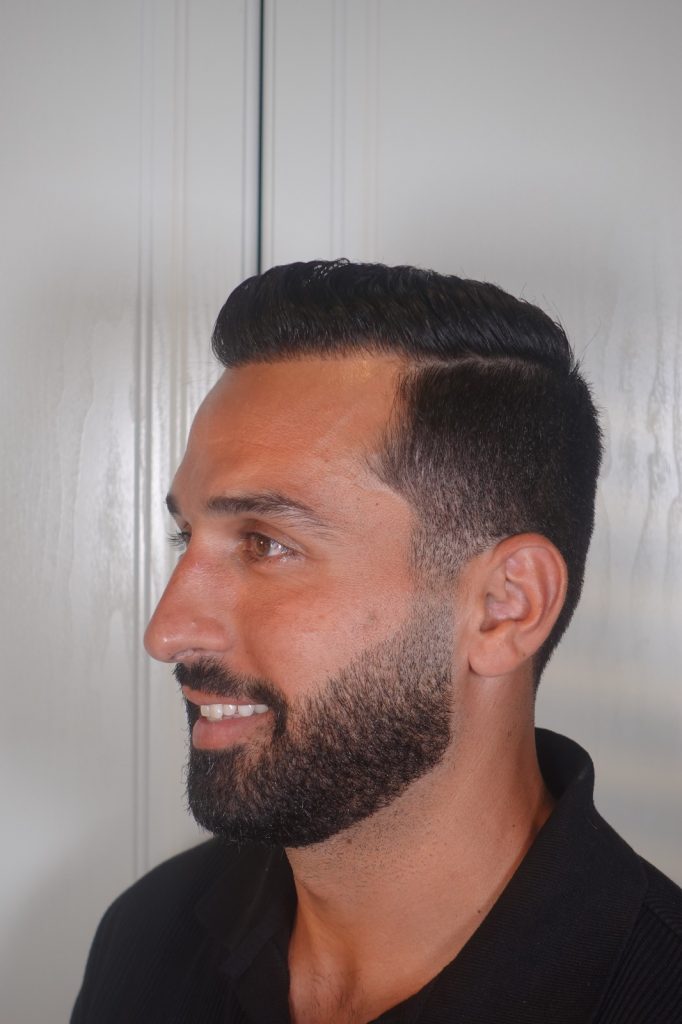
Left-side view at one year, providing another perspective on the hairline and surrounding hair.
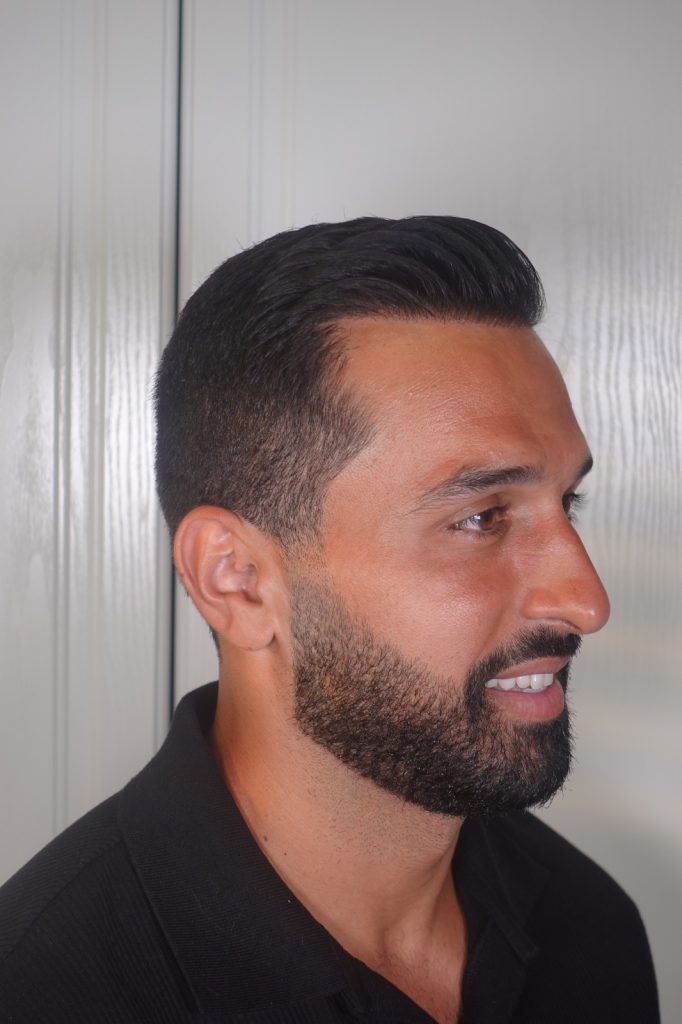
The Right Side: A More Complete Perspective
The Donor Area: An Important Part of the Outcome
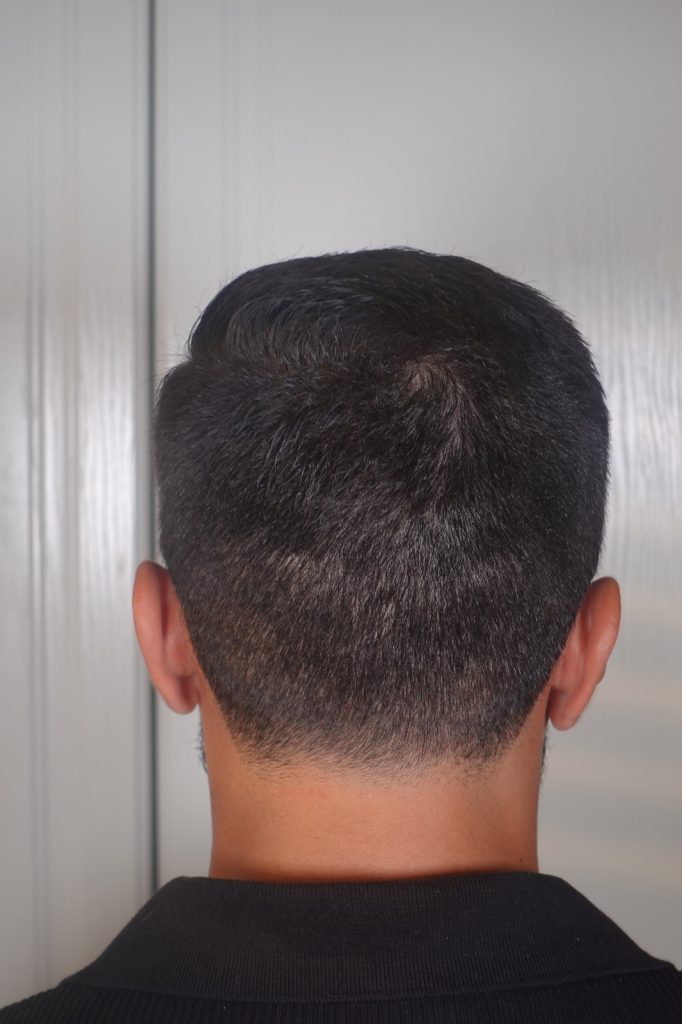
One-year donor-area follow-up. Donor appearance can vary depending on the procedure, healing, and individual characteristics.
The donor area should never be overlooked when evaluating a hair transplant. A comprehensive assessment considers not only the appearance of the transplanted hair but also the condition of the area from which the follicles were taken.
Together, these four views provide a more complete picture of the patient’s one-year outcome than a single frontal photograph alone.
For readers considering hair restoration, the key is to look at documented results, understand the treatment plan, and discuss realistic expectations with a qualified medical professional.
6. Hear the Story From the Patient Himself
Photographs show changes in appearance. A patient’s own account adds another dimension: what motivated the decision, what the experience was like, and how the patient feels about the journey.
This patient has also shared a video testimonial describing his hair transplant experience.
[EMBED PATIENT TESTIMONIAL VIDEO HERE]
Suggested video title: My Hair Transplant Journey at Hair Clinic Dubai | Patient Experience and One-Year Results
In his testimonial, viewers can hear directly from the person who experienced the procedure. His account offers an opportunity to understand the journey beyond the photographs, from his reasons for seeking treatment to his reflections on the overall experience.
We encourage prospective patients to watch the full testimonial and consider the photographs alongside his account.
Every patient is different, and an individual experience cannot guarantee the same result for another person. However, transparent documentation and first-hand accounts can help people ask better questions and make more informed decisions.
7. What Can You Learn From This Hair Transplant Journey?
This patient’s story highlights several important considerations for anyone exploring hair transplantation.
A natural-looking result starts with planning. Hairline design should take the patient’s facial features, existing hair, and long-term needs into account.
The donor area matters. An appropriate treatment plan considers the availability of donor follicles and the appearance of the donor area after harvesting.
Recovery takes time. The appearance during the first few days and weeks is not the final result. Transplanted hair often sheds initially before new growth develops.
One-year photographs offer valuable context. Multiple views taken at follow-up can help patients understand the outcome more fully, especially when compared with preoperative images.
Your goals should guide the consultation. Whether you work in front of a camera, meet clients every day, or simply want to feel more comfortable with your appearance, your treatment plan should be based on your individual needs and suitability.
8. Is Hair Transplantation Right for You?
If you are experiencing hair loss and considering a hair transplant in Dubai, the best first step is a professional consultation.
A consultation can help assess your hair loss pattern, the quality and availability of your donor hair, your medical suitability, and the results that may realistically be achievable.
It is also your opportunity to ask questions about the proposed technique, the doctor’s experience, postoperative care, potential risks, recovery, and long-term hair-loss management.
At Hair Clinic Dubai, we encourage prospective patients to make decisions based on a clear understanding of the procedure and an individualised assessment rather than promises of guaranteed results.
Your hair restoration journey should begin with information, not pressure.
Ready to Explore Your Hair Restoration Options?
You don’t have to make the decision today. Start by understanding your options and finding out what may be suitable for you.
Book a consultation with Hair Clinic Dubai to discuss your concerns, review your hair restoration goals, and learn about the next steps.
Visit: https://hairclinicdubai.com
Hair Clinic Dubai — Your hair restoration journey starts with a conversation.
Patient photographs and testimonial are shared with appropriate patient consent. Individual results vary. Hair transplantation is a medical procedure with potential risks and limitations; suitability and expected outcomes must be assessed by a qualified medical professional.
Ready to Begin Your Hair Restoration Journey?
Book a one-on-one consultation with our specialists and get a personalised treatment plan built around your goals.
Book a Consultation